


Renesas Electronics
»SDVs require far more than just computing power«
Vivek Bhan, Senior Vice President and General Manager of High Performance Computing at Renesas, explains the company's strategy regarding software-defined vehicles (SDVs) and what Renesas expects from this area.
Markt & Technik: You see SDVs as a major growth opportunity. This isn't really a new topic—why is Renesas pushing it right now?
Vivek Bhan: There are several reasons for this. As is well known, the automobile is undergoing a fundamental transformation—from static machines to dynamic, upgradeable technology platforms. The motivation behind this is easy to understand: When functions are implemented in software, it becomes possible to equip a vehicle with new features throughout its entire lifespan or to update existing features at any time. Accordingly, all major global OEMs are currently ramping up their investments in SDV programs. According to our own estimates, which are based on multiple third-party sources, over 75 percent of all new cars will be built according to SDV principles by 2035.
Renesas is a semiconductor manufacturer. Why do you think the semiconductor industry will benefit from the SDV trend?
It's quite simple: While software increases a vehicle's value, semiconductors are also becoming increasingly important. This is because the growing use of software leads, for example, to a sharp increase in the required computing power, but it also raises the demands on power management. Ultimately, this results in an increase in the proportion of semiconductors per vehicle; in the long term, this figure could even more than double.
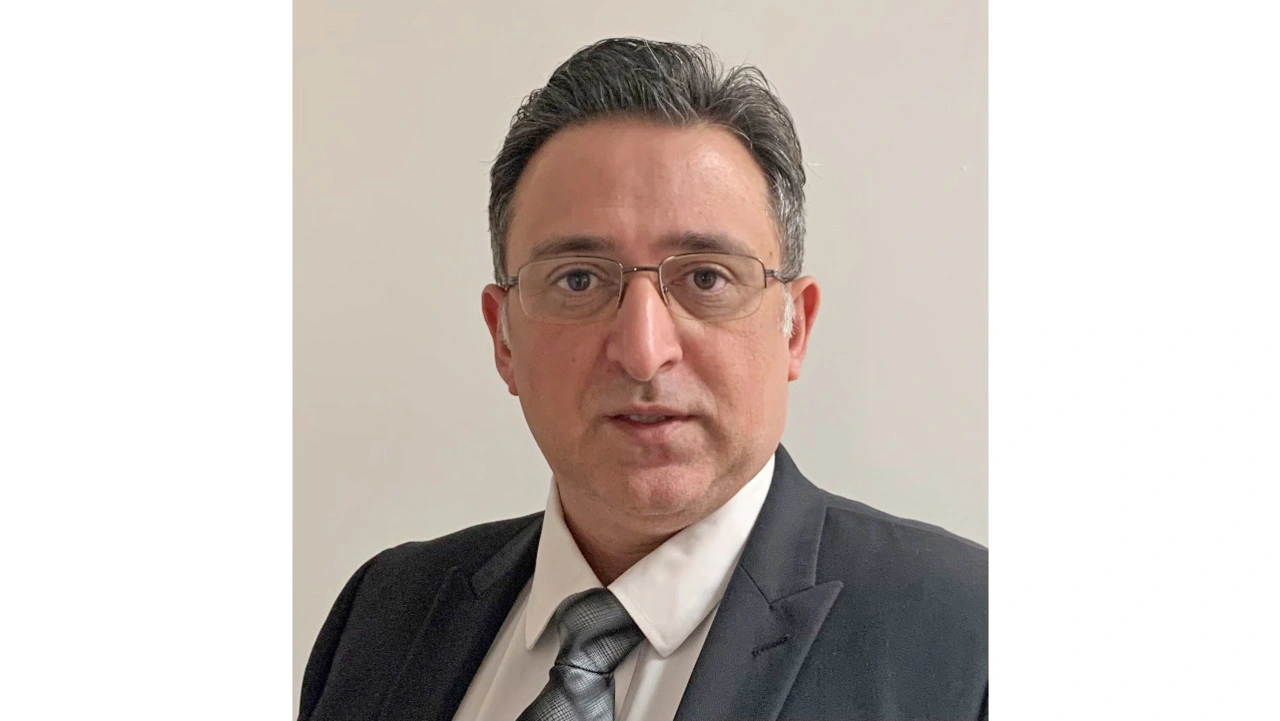
Vivek Bhan, Renesas Electronics:
»OEMs want freedom of choice and control—and Renesas offers them both.«
Renesas isn't the only semiconductor manufacturer interested in this market. In your opinion, what are the key reasons to choose Renesas as a supplier?
For example, many OEMs are very interested in moving away from closed, proprietary SDV ecosystems. They are therefore actively seeking partners to reduce their risks while retaining control. This presents a clear opportunity for Renesas to establish itself as a leading SDV provider and, together with key OEM partners, offer an open, collaborative, and flexible platform.
In addition, software-defined vehicles and artificial intelligence are transforming vehicles into intelligent platforms that are constantly evolving. This also increases the scope and complexity of automotive software—from the transition from ADAS Level 2 to Level 4, to the integration of generative AI with LLMs and VLMs, to over-the-air updates. And this requires powerful heterogenous computing platforms such as our R-Car SoC scalable portfolio.
In addition, we offer one of the broadest product portfolios of automotive MCUs, as well as power semiconductors and analog components.
Unlike us, some competitors focus solely on specific areas of vehicle architecture—such as central high-performance computers—while others rely on highly proprietary, closed platforms. However, our experience shows that OEMs do not want to be dependent on either a limited hardware portfolio or closed ecosystems. They want freedom of choice and control over their software and vehicle architecture. Renesas is an open platform partner offering an end-to-end solution—ranging from MCUs to zone controllers to high-performance SoCs, complemented by power solutions, software, and development tools.
You emphasize that Renesas works closely with a select group of OEMs. Why do you take this approach?
Not every vehicle manufacturer follows the same SDV strategy or is at the same stage of development. At the same time, many OEMs want to differentiate themselves more strongly in the future through their software and vehicle architecture. It is precisely these manufacturers who are looking for partners that offer them openness and flexibility, rather than tying them to a proprietary platform. And that is our strength - we work very closely with these OEMs at the platform level. Our goal is not merely to supply components, but to jointly develop an architecture that can evolve across multiple vehicle generations while allowing our customers to retain control over their software and vehicle platform.
You are also positioning your R-Car SoCs as a contender for the vehicle's central computer—and there are a few competitors in this space who are by no means small…
It’s not about the highest number of TOPS; the real value for OEMs lies in a unified architecture and system integration capability offered with the required level of safety and security. Raw computing power alone does not determine the success of a software-defined vehicle.
As mentioned, not every OEM is moving toward SDV at the same pace; some are already heavily relying on centralized architectures, while others are pursuing hybrid or zonal approaches. In addition, OEMs often serve different vehicle segments with different architectural concepts. This, too, results in widely varying computing power requirements.
Renesas offers a comprehensive portfolio ranging from low-end and high-end MCUs to zonal controllers and scalable R-Car SoCs, leveraging modern chiplet approaches and advanced manufacturing technologies. Our platforms combine heterogeneous computing power with CPU, graphics, and AI accelerators, thereby addressing the growing demands of software-defined vehicles for computing power, functional safety, data security, and energy efficiency. The hardware portfolio is complemented by analog and power solutions, as well as base software, frameworks, development tools, and an open development ecosystem.
And how is the market reacting?
Excellent—we are seeing a strong response from OEMs, Tier 1 suppliers, and the software ecosystem. R-Car Gen 4 is already in production, and Gen 5 is gaining momentum in next-generation SDV programs, including design-ins that have already been announced and several active requests for quotations (RFQs).
On the Tier 1 side, we have over a dozen active projects, including proof-of-concept and platform collaborations. We now have more than 15 active software and technology partners.
So business is definitely developing positively?
Yes, as mentioned, we expect software-defined vehicles to significantly increase the proportion of semiconductors per vehicle. At the same time, we want to expand our share of this value creation. Our goal is not only to supply individual components, but to provide an end-to-end platform and system solution consisting of MCUs, high-performance SoCs, power solutions, software, and development tools. In this way, we are laying the foundation for sustainable growth in the SDV era.
What are the next steps?
We are convinced that future vehicles will increasingly be shaped by multiple AI models and AI agents. That is why, going forward, the focus will not only be on maximum computing power, but also on the secure interaction between computing power, software, virtualization, and functional safety.
As stated, Renesas aims to evolve from a traditional semiconductor supplier into a provider of integrated platforms. To this end, we are systematically expanding our value proposition—from differentiated hardware and proprietary IP, through basic software and development tools, to software stacks and complete system solutions. Our goal is to reduce complexity for our customers, shorten development times, and accelerate the introduction of new SDV platforms.
At the same time, we are making targeted investments in common architectures, automated validation, AI-powered development tools, and the expansion of our own IP portfolio. In this way, we are laying the foundation for reusable, scalable platforms that can be further developed across multiple vehicle generations. At the same time, we are consistently expanding our SOC and MCU portfolio—including Arm-based solutions and, in the future, RISC-V-based solutions—to cover the entire spectrum of vehicles and to extend our technologies to adjacent markets such as robotics and physical AI in the future. Initial design wins already demonstrate that this strategy is paying off. With the increasing adoption of software-defined vehicles, we expect this to translate into broader customer acceptance and sustainable revenue growth in the coming years.

