


Inno Days 2026 by Wibu-Systems
A Deep Dive into Cybersecurity
Anyone looking for an in-depth exploration of software protection and secure software licensing will find this at the annual ‘Inno Days’ by Wibu-Systems: whilst this year’s event focused on the theme ‘Where Security Powers Digital Business’, next year’s event will centre on post-quantum security.
“Resilience is no longer a technical feature that could be added on at the end of a project,” said Steve Atkins, Publisher of The Quantum Space. “It has to become an operational capability that organizations have to build into everything that they do now. No organization can achieve this alone anymore. Whether we are talking about software suppliers, manufacturers, infrastructure operators, regulators or technology providers, resilience increasingly depends on collaboration, shared responsibility, and trusted relationships across the entire ecosystem as well as obviously adherence to NIS-2 and CRA.”
The background to this had been explained in detail earlier in the presentations and the panel discussion: As industrial systems are becoming increasingly software-defined, interconnected, regulated and exposed, companies are facing several transformations simultaneously. Industrial software is taking on a strategic role, is subject to further regulation, is becoming more interconnected and is exposed to greater risks. AI is changing the way products and systems are developed and operated. The Cyber Resilience Act and NIS-2 are redefining product responsibilities and making cybersecurity a responsibility spanning the entire lifecycle. As software becomes a key value driver in industrial products, the protection and licensing of technical security measures are evolving into strategic control mechanisms for secure digital business. Issues such as open source, supply chain dependencies, secure communication, vulnerability response, licensing, business model innovation and secure lifecycle control are evolving from specialist topics into decision-making factors at management level.
Inno Days 2026 focused on these topics and brought them together within a targeted framework. Contributors included Siemens Digital Logistics, Trumpf, KIT, VDMA, OSADL, Codesys, Schneider Electric, BSI, Offenburg University of Applied Sciences, StAl Consult, Informatics, The Quantum Space and Wibu-Systems. The agenda linked AI, the Cyber Resilience Act, open source, secure communication, confidential computing, software protection, licensing and cyber resilience.
“Industrial groups and software-driven companies no longer face isolated challenges; AI, regulation, software-defined products, supply chain risks and new digital business models are all converging,” said Oliver Winzenried, CEO and founder of the organizer, Wibu-Systems. “With the Inno Days, we have brought top-class experts together around one table: experts who understand these developments from different perspectives, and participants who need to put these insights into practice.” Software is ubiquitous and creates ever-increasing value: “The more indispensable software becomes, the more important secure software becomes – firstly to protect against tampering and cyber-attacks, and secondly to ensure that only the correct software components are used and that they function securely and reliably.”
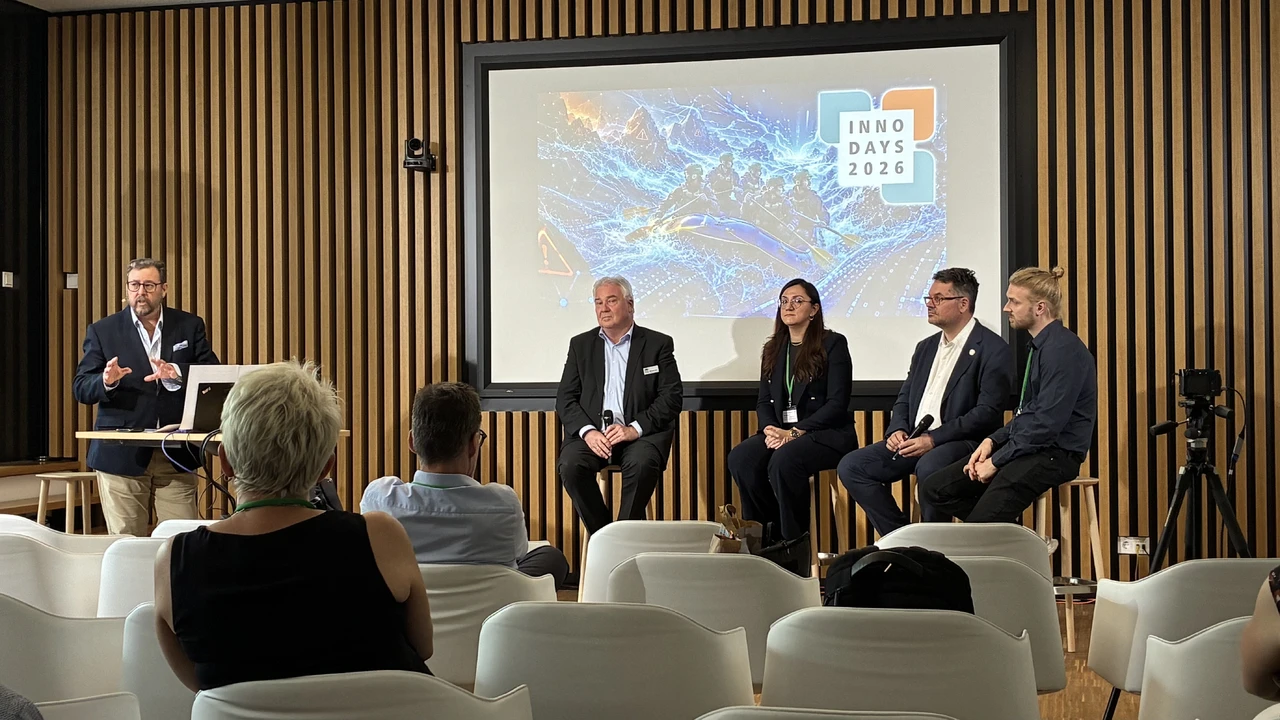
The closing panel discussion at Inno Days 2026 (from left to right): Moderator Steve Atkins (The Quantum Space), Oliver Winzenried (Wibu-Systems), Nisveta Sivro (Cybersecurity Test & CERT Programme Manager at Schneider Electric), Jens Wiesner (Head of Division at the Federal Office for Information Security), Maximilian Moser (Industrial Cybersecurity Consultant at the VDMA).
Steve Atkins considered that perhaps the most important insight from Inno Days 2026 was that vulnerabilities themselves no longer posed the real challenge, because people had by now almost come to terms with the fact that they existed. “And the real test is how quickly organizations can detect them, understand them, coordinate their response and recover while maintaining confidence, continuity and trust, and also to understand the difference between responsibility and accountability. Perhaps that is probably the real shift that is taking place across our industry today. We are moving from that we can prevent every breach to asking how do we continue to operate safely, securely and confidently.”
